New Kitten’s First Week Checklist: Calm Care Day by Day
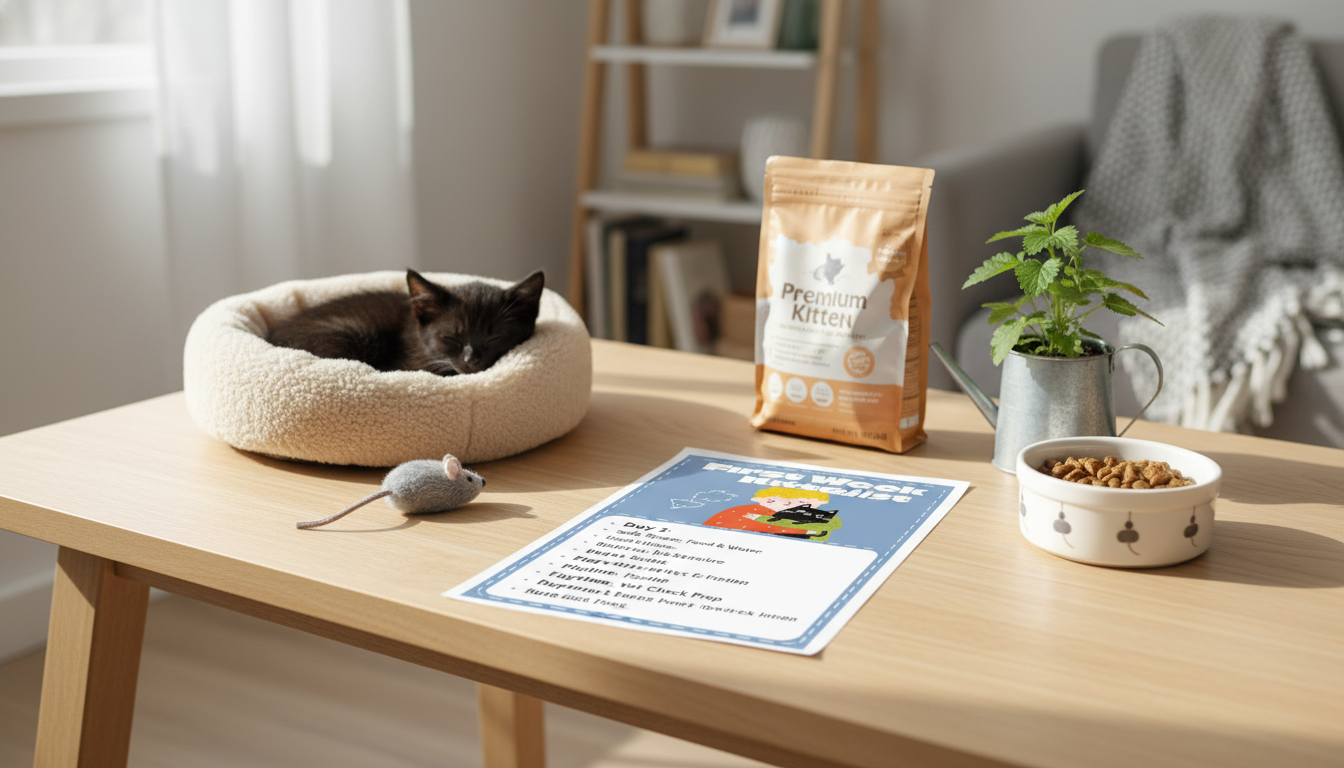
Your First Week With a New Kitten: A Simple Checklist for Calm, Confident Care
The first week sets the tone for a kitten’s health, habits, and sense of safety. A clear plan helps with the basics—food, litter, sleep, play, and the first vet visit—while reducing stress for both the kitten and the household. Use the steps below to create a smooth “landing zone,” establish simple routines, and spot problems early.
Before the Kitten Arrives: Set Up a Safe “Home Base”
Pick one small, quiet room to serve as your kitten’s temporary headquarters for the first 24–72 hours. A bedroom, office, or even a bathroom can work well because it limits overwhelming sights, sounds, and hiding spots.
- Choose a calm room and close off access to the rest of the home at first.
- Remove hazards: dangling cords, small swallowable items, open windows, and gaps behind appliances.
- Check houseplants carefully—many are unsafe for cats (lilies are especially dangerous). The ASPCA toxic and non-toxic plant list is a reliable reference.
- Set up essentials spaced apart: food and water on one side, the litter box on the other, and a cozy bed/hideaway in a quiet corner.
- Add one scratching option and a few simple toys; keep day-one stimulation low.
- If you have other pets, plan a gradual introduction with separate spaces, scent swapping, and supervised meetings.
Day 1: Arrival, Decompression, and First Routines
Think “quiet and predictable.” Your kitten has just experienced a major change, even if they seem bold. Let curiosity lead and keep interactions short.
- Keep voices low; handling should be minimal and gentle. Let your kitten explore at their own pace.
- Offer a small meal and fresh water shortly after arrival. A reduced appetite for the first day can happen from stress.
- Show the litter box location and gently place your kitten in it once or twice (no forcing or “training” pressure).
- Start a simple rhythm: consistent meal times, a short play session, then quiet rest.
- Watch for urgent issues like extreme lethargy, breathing trouble, repeated vomiting, or severe diarrhea—contact a veterinarian if you notice these.
If you’re planning a vet visit soon (recommended), begin making the carrier a normal object now. A comfy, stable carrier can make that first trip far less stressful—consider the Cozy Travel Pet Carrier for a soft, enclosed option that’s easy to leave out in the room.
Days 2–3: Eating, Litter Habits, and Comfort at Night
Days two and three are where routines begin to “stick.” Your goal is consistency—not perfection.
- Keep the same food at first. If you need to change diets, transition slowly over 7–10 days to reduce stomach upset.
- Use a shallow litter box with unscented litter. Scoop daily so the box stays inviting.
- Offer multiple rest spots: one warm and covered (like a box or cave bed) and another open for lounging.
- For nighttime: use a predictable routine (play → small snack → lights dim). A warm blanket and a safe plush can help your kitten settle.
- Practice brief, positive handling: gentle chin scratches, light brushing if tolerated, and short “pick up and set down” moments paired with calm praise.
Days 4–7: Build Confidence Through Play, Training, and Gentle Exposure
Health Basics for the First Week: Vet Visit, Vaccines, and Parasites
Schedule a wellness exam soon after bringing your kitten home, especially if you don’t have recent medical records. Bring any shelter or breeder paperwork and note anything unusual you’ve observed. The AVMA pet care resources and the Cornell Feline Health Center are helpful references for general feline health topics.
For an easy way to log weigh-ins and spot trends early, the Healthy Paws, Happy Life | AI Pet Weight Tracking Guide can help you keep notes organized for your next vet check.
First-Week Quick Checklist (Printable-Friendly)
| Day | Focus | What to Do | What to Watch |
|---|---|---|---|
| Day 0 (Prep) | Home base | Set up food/water, litter, bed, hideout, scratcher | Hazards, escape routes, toxic plants |
| Day 1 | Decompress | Quiet room, small meal, show litter box, minimal handling | Not eating, severe lethargy, repeated vomiting/diarrhea |
| Days 2–3 | Routines | Consistent feeding, litter habits, bedtime routine | Accidents, straining in box, persistent diarrhea |
| Days 4–7 | Confidence | More play, scratching habits, carrier comfort, expand space | Hiding nonstop, aggression from fear, upper respiratory signs |
| Any day | Vet plan | Book exam, review records, ask about vaccines/parasites | Urgent symptoms—call vet promptly |
Make It Easier: Use a Ready-to-Print First Week Checklist
If you’d like a ready-made version that covers feeding, litter, sleep, play, carrier practice, and vet scheduling prompts, use the Your First Week Kitten Checklist | Printable First Week Checklist for New Kittens (Digital Download).
FAQ
When should a new kitten see the vet?
Schedule a wellness exam soon after bringing your kitten home, and bring any shelter or breeder records. Ask about vaccines, deworming, flea prevention for your kitten’s age/weight, and microchipping. If you notice urgent symptoms (like repeated vomiting, severe diarrhea, or breathing trouble), contact a vet immediately.
What should a kitten eat during the first week at home?
Keep the same food your kitten was already eating to reduce stomach upset, and offer an age-appropriate kitten formula diet with fresh water available. If you need to switch foods, transition gradually over 7–10 days. Call your vet if poor appetite, vomiting, or diarrhea persists.
How can a kitten settle at night during the first week?
Use a predictable routine: a short play session followed by a small snack, then dim lights and quiet. Provide a warm, safe sleeping spot in the kitten’s home base room and avoid high-energy play right at bedtime. Many kittens need a few nights to adjust, so consistency matters most.











Leave a comment