New Pet First Week Checklist: Dogs & Cats Day-by-Day
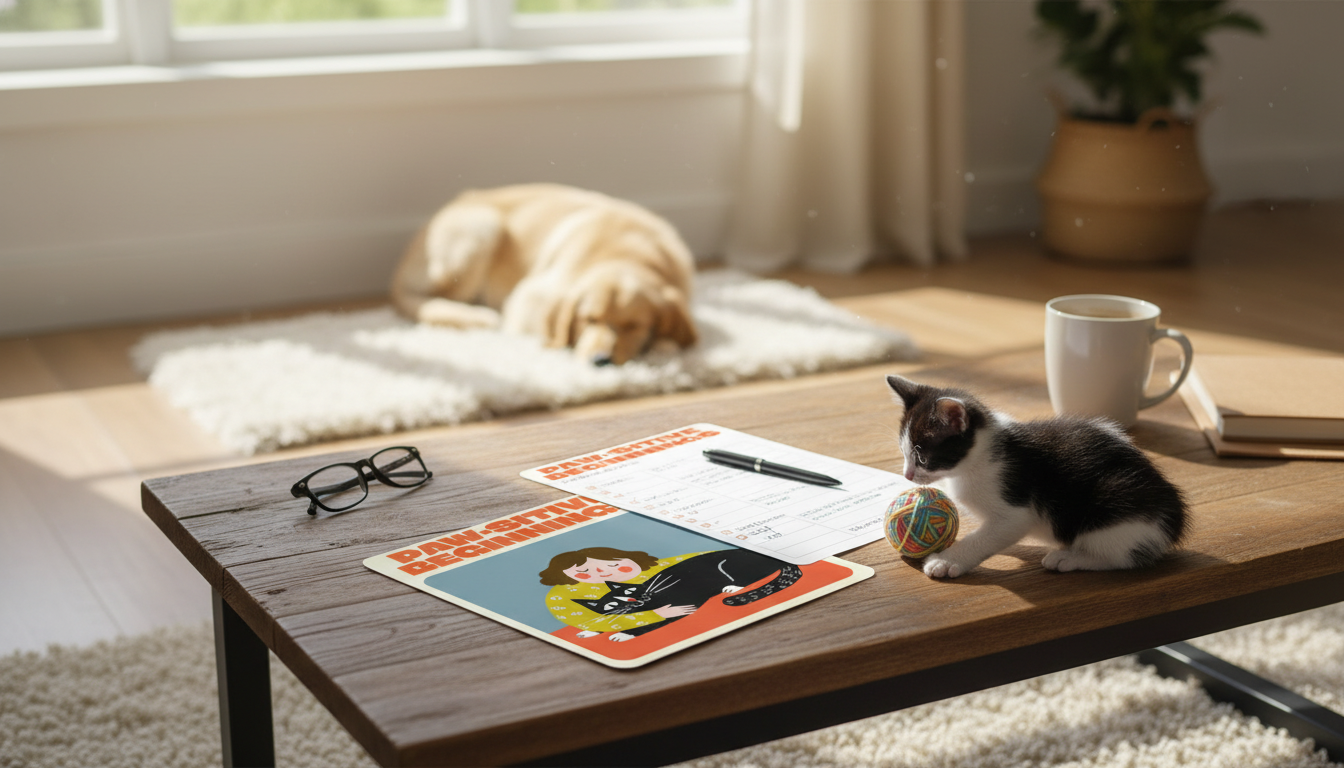
Your First Week of Paw-sitive Beginnings: A New Pet Owner Checklist for Dogs and Cats
The first week with a new dog or cat sets the tone for trust, routines, and long-term health. A simple day-by-day plan keeps things calm, helps prevent common beginner mistakes, and makes sure essentials like food, sleep, potty habits, and a first vet visit happen early. If you want an easy way to stay consistent (especially in a busy household), Download the “Your First Week of Paw-sitive Beginnings” printable checklist and keep it on the fridge or by your pet supplies.
Before Day 1: Set up a calm “landing zone”
Think of the landing zone as your pet’s temporary “starter home.” A quieter, smaller area reduces overwhelm and helps you spot patterns (like eating, potty, and sleep) faster.
- Start small: Choose one quiet room or corner and limit access to the full home for the first 24–72 hours.
- Gather essentials: Species-appropriate food, bowls, a bed or crate, litter box (cats), leash/harness (dogs), ID tag, enzyme cleaner, grooming basics, and a few safe toys.
- Pet-proof thoroughly: Secure cords, remove small chewables, store chemicals/meds up high, block unsafe gaps, and check houseplants for toxicity. (The ASPCA pet care resources are a solid starting point for common hazards.)
- Decide house rules now: Furniture access, sleeping spot, and feeding schedule should be consistent for everyone in the home.
- Plan resident-pet introductions: Start with scent-only steps (blanket swap, separate feeding areas) before face-to-face meetings.
Day 1: Arrival routines that build safety fast
Keep Day 1 intentionally boring. Your goal is to show your new pet that your home is predictable, gentle, and safe.
- Go low-key: Offer water, a small meal, and a clear resting spot. Skip visitors and loud excitement.
- Dogs: Take a potty break immediately after arriving, then frequently (about every 1–3 hours while awake). Reward calm outdoor success.
- Cats: Place your cat in the prepared room with the litter box visible and easy to access. Let curiosity lead—avoid pulling them out of hiding.
- Bond with quiet wins: Gentle voice, slow movements, and short play sessions that end before your pet gets over-threshold.
- Expect decompression: Hiding, clinginess, panting, extra sleeping, or reduced appetite can be normal for the first 24–48 hours.
Days 2–3: Establish the “same time, same place” schedule
By Days 2–3, your pet is starting to map your home and your habits. This is where consistency does most of the heavy lifting.
Days 3–5: Health checks, documentation, and the first vet appointment
Even if your new pet “seems fine,” a baseline exam helps you catch issues early and get personalized guidance on vaccines, prevention, and nutrition. The American Veterinary Medical Association (AVMA) pet care guidance and AAHA pet owner education are good references for what to expect from routine care.
First-Week Routine Tracker (Dogs & Cats)
| Day | Meals & Water | Potty/Litter | Sleep & Calm Time | Play/Training | Notes to Share With Vet |
|---|---|---|---|---|---|
| Day 1 | Confirm food type/portion; note appetite | Dogs: frequent breaks; Cats: litter location confirmed | Quiet rest periods; low stimulation | Short, gentle play | Stress signs, hiding, accidents |
| Day 2 | Same feeding times; monitor drinking | Track frequency and stool quality | Night routine begins | Name recognition; brief handling | Coughing/sneezing, itching |
| Day 3 | Maintain portions; limit new treats | Accident prevention plan | Add a safe retreat spot | Dogs: leash indoors; Cats: wand play | Behavior changes, appetite dips |
| Day 4 | Adjust portions only if advised | Improving consistency expected | More calm time than activity | Micro-sessions only | Any GI upset or lethargy |
| Day 5–7 | Stable routine; consider slow diet transitions | Fewer accidents; steadier litter use | Relaxed sleep patterns developing | Add simple cues/enrichment | Questions for vet, progress wins |
Days 5–7: Socialization, introductions, and home expansion
Common first-week surprises (and what usually helps)
Printable checklist: make the first week simple to follow
A written plan keeps the basics from slipping through the cracks: feeding times, potty/litter patterns, sleep, and questions for the vet. For a ready-to-print day-by-day layout, Download the “Your First Week of Paw-sitive Beginnings” printable checklist.
Once your pet is settled, it also helps to track longer-term trends that can signal health changes early; Track long-term wellness with a pet weight monitoring guide to keep measurements and notes in one place. And for early vet trips or calmer transport days, Set up safe travel days with a cozy pet carrier so your pet has a consistent, familiar “mobile landing zone.”
FAQ
What is normal behavior in the first week with a new dog or cat?
Decompression is normal: a new pet may hide, cling, sleep more than expected, or eat less for a day or two while they adjust. A quiet space and predictable routines usually help; call a vet if you see urgent red flags like repeated vomiting, bloody stool, trouble breathing, collapse, or inability to urinate.
When should the first vet visit happen after bringing home a new pet?
Schedule it as early as you can—often within the first week—especially if your pet’s history is unknown or they’re very young. The first visit typically covers a baseline exam, vaccine planning, parasite prevention, microchip review, and nutrition guidance.
How do introductions work if there is already a pet at home?
Start with scent-first steps and keep resources separate (food, water, litter boxes, beds) to reduce tension. Do short, supervised meetings and go slower if either pet shows stress signals or guarding behaviors.











Leave a comment