Pet Care Chores for Kids by Age + Printable Checklist
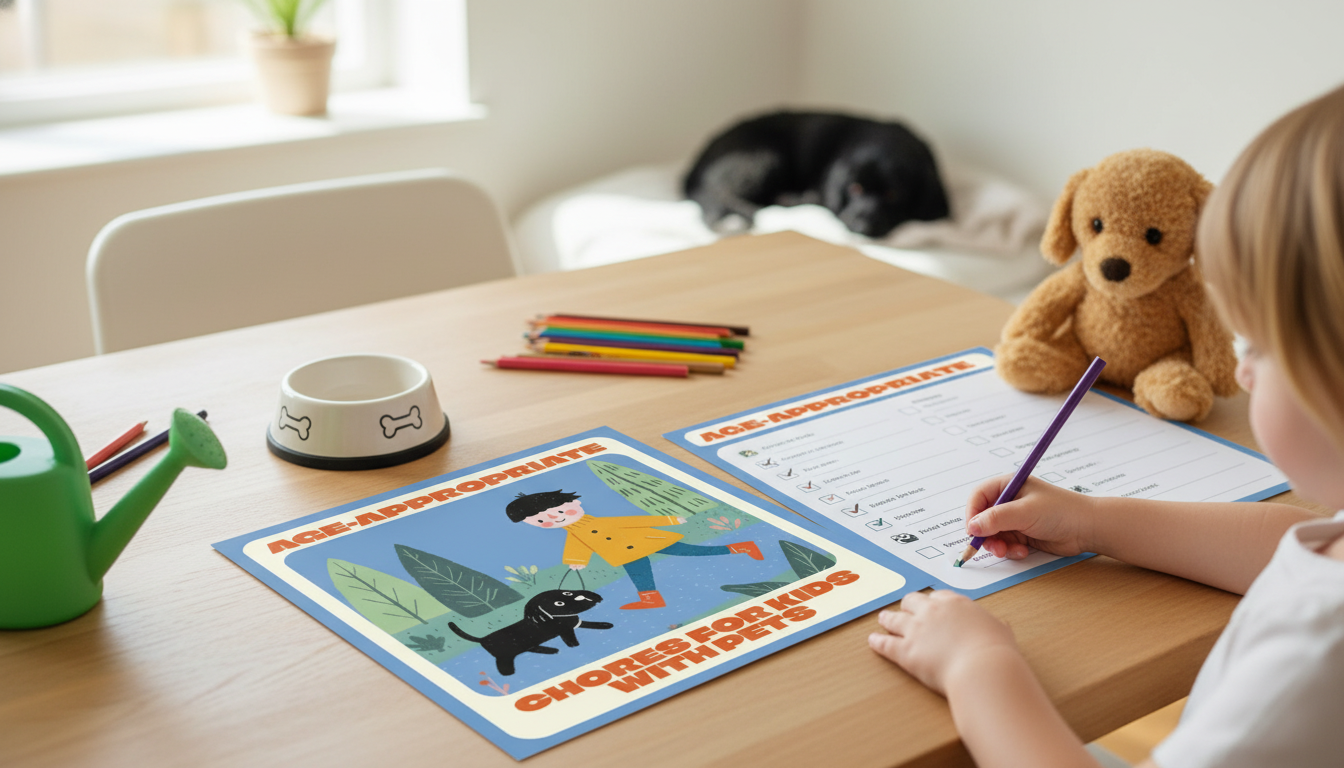
Age-Appropriate Pet Care Chores for Kids (With a Printable Family Checklist)
Sharing pet care as a family builds dependable routines while helping kids practice kindness, patience, and follow-through. When chores are matched to a child’s age (and a pet’s comfort level), daily care becomes simpler to manage—and easier to celebrate. Below you’ll find a practical task ladder, safety boundaries, species-specific ideas, and a printable checklist system that keeps everyone on the same page.
What Kids Learn When They Help With Pet Care
Pet chores are a real-world way to practice skills that matter at home and beyond. Even small, repeatable tasks can help kids build:
- Responsibility: pets rely on consistent food, water, and clean spaces.
- Empathy: noticing body language and comfort levels teaches kids to slow down and pay attention.
- Executive skills: time awareness, sequencing steps, and finishing tasks.
- Family teamwork: shared roles reduce missed feedings and last-minute stress.
- Confidence: kids see a direct positive impact on an animal’s wellbeing.
Safety First: Boundaries That Keep Kids and Pets Calm
Clear boundaries protect everyone—especially when kids are excited and pets are tired, hungry, or unsure. For general pet-care guidance, you can also reference the American Veterinary Medical Association (AVMA) pet owner resources and the American Academy of Pediatrics safety tips around animals.
- Adult-only tasks: medications, nail trimming, teeth brushing for anxious pets, litter deodorizer chemicals, and deep cleaning with strong products.
- Kid-safe rules: no face-to-face hugs, no waking a sleeping pet, and hands away from food bowls while a pet is eating.
- Supervision guidelines: toddlers and preschoolers only with close adult support.
- Hygiene basics: wash hands after chores; keep pet supplies separate from dishes and food prep.
- Body-language check: pause chores if a pet shows stress signals (growling, stiff posture, tail tucked, flattened ears).
Chores by Age: A Family-Friendly Task Ladder
A good system starts small and grows with consistency. Pick tiny, repeatable jobs and add complexity as follow-through improves. For each task, define what “done” looks like (for example: water bowl filled to a line; no kibble on the mat). Rotating roles weekly can also prevent boredom and balance skills across siblings.
A calm, predictable order helps many households: check water → feed → quick tidy → play/exercise → evening reset.
Age-Appropriate Pet Care Chores (Quick Reference)
| Age range | Good starter chores | Adult support needed | Skills practiced |
|---|---|---|---|
| Ages 2–4 | Carry empty bowl to sink, pour pre-measured food with help, gentle toy play, put toys in a bin | Constant supervision | Routine, gentle handling, simple directions |
| Ages 5–7 | Refill water, scoop kibble with a marked scoop, brush pet with soft brush, help with leash hand-off at door | Close supervision for handling and tools | Consistency, tool use, patience |
| Ages 8–10 | Measure food, refresh bedding, basic habitat tidy (with guidance), wipe paw prints, simple training cues | Check-in and periodic supervision | Planning, attention to detail, empathy |
| Ages 11–13 | Lead walks with adult nearby, schedule-based feeding reminders, litter box scoop (if appropriate), track pet’s habits | Light supervision; safety review | Time management, observation, reliability |
| Ages 14+ | Primary caretaker for routine tasks, bathing assistance, supply inventory, basic grooming support, vet-visit prep checklist | As needed based on pet and task | Ownership, problem-solving, leadership |
Species-Specific Task Ideas (Dogs, Cats, Small Pets, Fish)
Matching chores to the type of pet keeps expectations realistic and prevents “help” from turning into chaos. A helpful baseline for humane care expectations is the ASPCA pet care library.
How to Use a Printable Checklist Without Power Struggles
If you want a ready-to-print system designed around age ranges, the Printable pet care checklist for kids and families (digital download) keeps daily care simple to track and easy to rotate between siblings.
Teach Empathy Through Observation (A Simple Daily Check-In)
Common Sticking Points (and Easy Fixes)
Printable Pet Care Checklist for Families (Digital Download)
A good printable clarifies responsibilities without turning pet care into nagging. The The Age-Appropriate Chores for Kids with Pets (digital download) is designed to match chores to age, separate daily “must-dos” from optional extras, and work for multiple pets using separate rows or separate pages.
Helpful Add-Ons for Ongoing Pet Wellness
Daily chores cover the basics, but simple tracking can add a big layer of prevention. A lightweight habit can include noting appetite, activity, and any changes you’d want to mention at a vet visit. For families who like structure, the Pet weight tracking guide for smart pet owners (digital download) supports consistent monitoring and more confident check-ins.
For vet visits and outings, keeping transport predictable can reduce stress for both kids and pets—especially when a child is assigned a “prep” role (packing a small towel, treats, and paperwork). The Cozy travel pet carrier for vet visits and outings can make that routine feel more organized.
FAQ
What chores are safe for young kids to do with a pet?
Stick to low-risk, low-contact tasks like refilling water with help, tidying toys, and gentle supervised play. Avoid medications, trimming, and chemical cleaners, and keep a close adult nearby to guide calm handling rules.
How many pet chores should a child have each day?
For most kids, 1–2 consistent daily tasks is the sweet spot, with an optional “extra kindness” task when time allows. Consistency matters more than volume, and chores should match both the child’s age and the pet’s temperament.
How can a checklist teach empathy, not just responsibility?
Add a brief daily observation step (mood/energy check) before any chores, and encourage consent-based interaction by letting the pet approach first. Include a simple rule that any change in eating, movement, or hiding behavior gets reported to an adult right away.









Leave a comment