Tarantula Not Eating? Calm Checks for Premolt & Hydration
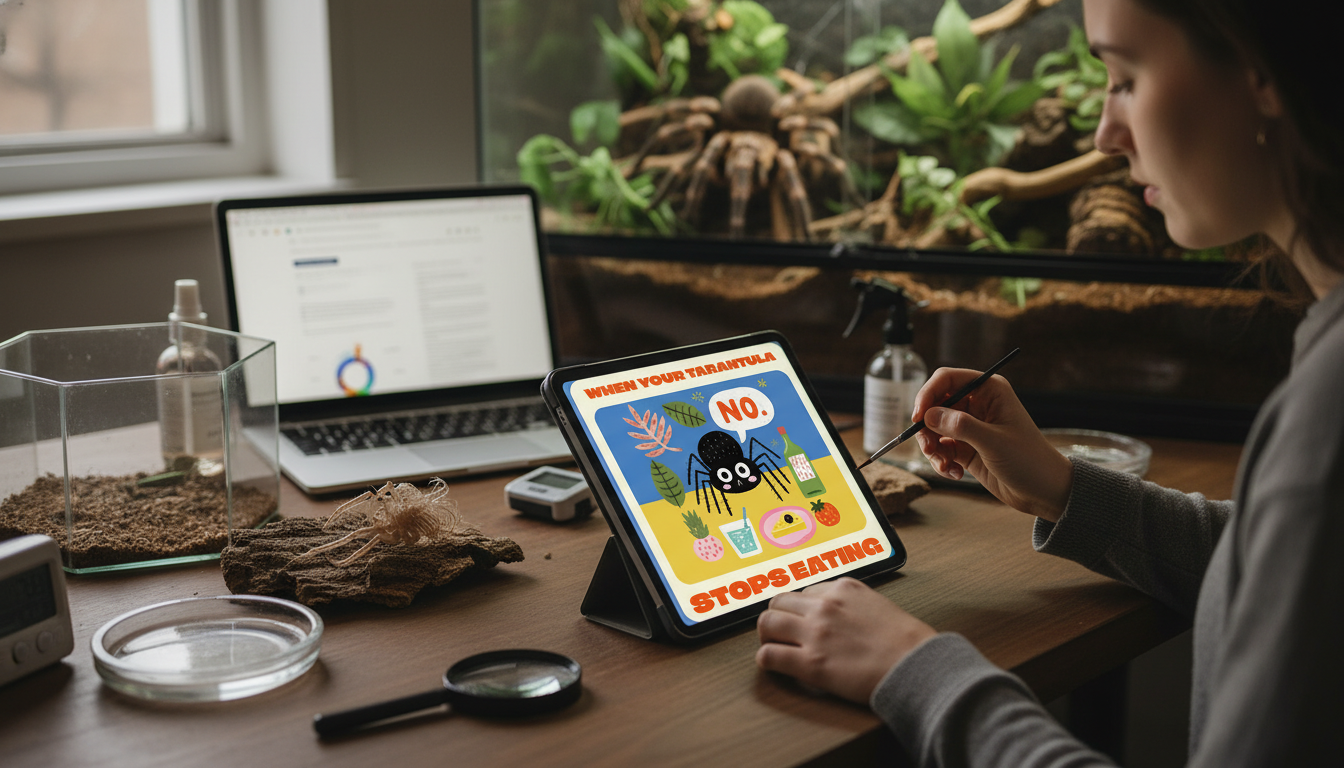
When Your Tarantula Stops Eating: Practical Causes, Checks, and Calm Next Steps
A tarantula refusing food is often normal, but it can also point to dehydration or a husbandry mismatch. The safest approach is a low-stress checklist: confirm what “not eating” means for your individual, stabilize the environment, verify hydration, and only then adjust feeders or technique. This is especially important for tiny slings and recently imported animals, which have less buffer when something is off.
Start with the basics: what “not eating” really means
Confirm the timeframe
One skipped meal is rarely a crisis. Weeks to months can still be normal for many adults, but the same timeline is more concerning for slings. Use dates instead of memory—fasting often feels longer than it is.
Track life stage
Slings (especially very small ones) can dehydrate or lose condition faster than juveniles and adults. Adults commonly go on extended fasts without any measurable decline.
Check body condition, not just appetite
Compare the abdomen to the carapace. A stable, rounded abdomen suggests the tarantula is managing fine. A visibly shrinking, wrinkled, or suddenly deflating abdomen is a stronger warning sign than “not eating.”
Look for normal pre-molt behavior changes
More hiding, different webbing patterns, and reduced roaming can be normal and temporary. Some species “renovate” their hide or lay heavier webbing and then ignore prey for a while.
Most common non-problem reasons: premolt, recent molt, and seasonal slowdowns
Premolt cues
Common signs include darker or duller coloration, slower movement, and a stronger preference for staying in the hide. Some species show a shiny bald patch on the abdomen as urticating hairs are kicked off and the skin darkens beneath.
After a molt: wait before feeding
Freshly molted tarantulas need time for their fangs to harden. A typical wait is 7–14 days for many juveniles and adults, and longer if the fangs still look pale. Offer water immediately, keep the enclosure calm, and resist the urge to “test” appetite too soon.
Seasonal/metabolic slowdowns
Many adults slow down feeding for long stretches with no weight loss. When appetite drops but the abdomen stays stable, constant tinkering often does more harm than good. Aim for steady, species-appropriate conditions instead of rapid changes.
Reset feeding expectations
Tarantulas don’t need frequent meals. Overfeeding can create an oversized abdomen, raising the risk of injury from falls and making routine movement clumsier. A calm, consistent schedule is usually safer than pushing food.
Husbandry checks that most often explain a feeding strike
Temperature: verify, don’t guess
Confirm the enclosure’s actual temperature with a reliable thermometer. Avoid heat rocks and sudden swings; stable room temperatures are often preferable to aggressive localized heating.
Humidity and ventilation: balance matters
Water access: make it easy and safe
Enclosure setup and security
Recent changes and vibrations
Feeder and technique problems: when the food is the issue
Prey size: smaller is often smarter
Feeder type preferences
Feeder quality and timing
Remove uneaten prey
Decision table: likely causes, what to look for, and what to do next
| Likely cause | Common signs | Safe next step | How urgent? |
|---|---|---|---|
| Premolt | Hiding more, reduced activity, darker coloration, webbing changes | Stop feeding attempts; ensure water; remove live feeders | Low unless sling losing condition |
| Post-molt recovery | Newly molted, pale coloration, soft fangs | Wait for fangs to harden; offer water only; keep enclosure calm | Medium if dehydration suspected |
| Stress from disturbance | Restless pacing or freezing, refusal after move/rehousing | Reduce vibrations/handling; provide secure hide; keep lighting low | Low to medium |
| Temperature/humidity imbalance | Lethargy, constant climbing, avoiding substrate, persistent refusal | Verify with instruments; adjust gradually; improve ventilation if too wet | Medium |
| Dehydration | Shriveled abdomen, lethargy, weak response, legs tucked under | Provide water dish; add moisture gradient; consider emergency rehydration methods appropriate to species/size | High—act promptly |
| Feeder issue (size/type) | Interest shown but no strike, prey ignored | Downsize prey; try different feeder; pre-kill for slings when appropriate | Low |
| Illness/parasites (rare) | Persistent decline, odd posture, mites/heavy infestation, unexplained weakness | Isolate, review husbandry, consult an experienced keeper/vet familiar with inverts | High if rapid decline |
When refusal becomes urgent: red flags that need faster action
Simple tracking and decision support to reduce guesswork
For structured checklists, troubleshooting flowcharts, and tool-assisted care planning, use When Your Tarantula Stops Eating | Digital Guide for Tarantula Keepers | Understand Why Is My Tarantula Not Eating + Expert Tips & AI Care Tools.
If you also keep cats or dogs and want a separate, simple way to stay consistent with body-condition tracking routines at home, Healthy Paws, Happy Life | AI Pet Weight Tracking Guide for Smart Pet Owners | Digital Download eBook for Cat & Dog Health Monitoring can help reinforce the habit of logging changes before they become obvious.
For broader husbandry principles and welfare fundamentals, see references like The Merck Veterinary Manual and the British Tarantula Society.
FAQ
How long can a tarantula go without eating?
It varies widely by species, age, season, and body condition. Many healthy adults can fast for months, while slings have less reserve, so abdomen condition and hydration matter more than counting days.
Should food be removed if a tarantula won’t eat?
Yes—remove uneaten prey within 24 hours (sooner for crickets), and never leave live prey with a tarantula that may be in premolt or has recently molted. This reduces stress and prevents feeder insects from injuring a vulnerable tarantula.
What are the signs my tarantula is dehydrated?
Common signs include a shriveled or wrinkled abdomen, lethargy, weak response to stimulation, and a curled-under posture. Provide fresh water and a safe moisture gradient promptly, and seek experienced help if weakness progresses or the posture tightens.











Leave a comment