Pet Care and Responsibility: Age-Based Tasks for Kids
How Caring for Pets Teaches Responsibility: A Practical Guide for Families and Educators
Daily pet care turns abstract values like follow-through, empathy, and time management into visible routines children can practice. With clear roles, age-appropriate tasks, and consistent check-ins, caring for a pet can become a reliable way to build responsibility at home or in a classroom community.
Why pet care builds responsibility so effectively
Pet care works because it makes responsibility real. A full bowl, a clean habitat, and a calm, comfortable animal are tangible results that children can see and measure.
- Natural cause-and-effect: when a task is skipped, the impact is immediate (empty water bowl, missed walk), making accountability concrete.
- Repeating routines strengthen habits: feeding schedules, grooming days, and cleaning cycles create predictable responsibilities.
- Empathy supports self-control: noticing an animal’s comfort and stress cues encourages patience and gentle handling.
- Confidence grows through competence: mastering small tasks leads to pride and readiness for bigger responsibilities.
- Shared caregiving teaches cooperation: families and classrooms can practice handoffs, reminders, and respectful problem-solving.
For best outcomes, pair routines with basic safety guidance from trusted sources like the American Veterinary Medical Association (AVMA) and hygiene practices recommended by the CDC Healthy Pets, Healthy People.
Match tasks to age and readiness
Responsibilities should fit both the child and the animal. Age is a helpful starting point, but readiness matters more: attention span, consistency, and comfort around animals can vary widely.
- Ages 3–5: simple, supervised tasks like refilling water with a small cup, handing over supplies, or helping count kibble.
- Ages 6–8: daily tasks with checklists such as measured feeding, brushing, and putting toys away.
- Ages 9–12: multi-step routines like cleaning bowls, scooping litter with supervision, or setting up enrichment activities.
- Teens: full ownership of a routine (walks, training sessions, scheduling reminders), plus budgeting or planning vet visits with adults.
- Use readiness over age when needed: attention span, consistency, and comfort around animals matter more than birthdays.
Responsibility-building pet tasks by age
| Age range | Good starter tasks | What the adult/educator monitors | Responsibility skill practiced |
|---|---|---|---|
| 3–5 | Refill water, put toys in bin, gentle petting rules | Safety, hygiene, supervised handling | Following directions |
| 6–8 | Measured feeding, brushing, daily checklist | Portion control, consistency | Routine and follow-through |
| 9–12 | Clean bowls, help with litter, enrichment games | Sanitation, task sequence | Planning and reliability |
| 13–18 | Walk schedule, training goals, reminders, budgeting help | Time management, animal welfare, safe outings | Independent ownership |
Set up a simple responsibility system that sticks
A responsibility system should be easy to follow on busy mornings and tired evenings. The goal is consistency, not perfection.
- Define roles clearly: primary caregiver, backup caregiver, and adult/teacher supervisor.
- Use visible cues: wall chart, fridge checklist, or classroom board with daily and weekly tasks.
- Start small for two weeks: add one new responsibility at a time to avoid overload.
- Add accountability moments: a 2-minute morning check and a 2-minute evening check prevent missed tasks.
- Build in “make-up” steps: if a task is forgotten, the child completes it promptly plus a small extra (e.g., refresh water and tidy area).
- Keep supplies accessible: pre-measured scoops, labeled bins, and cleaning tools stored safely and consistently.
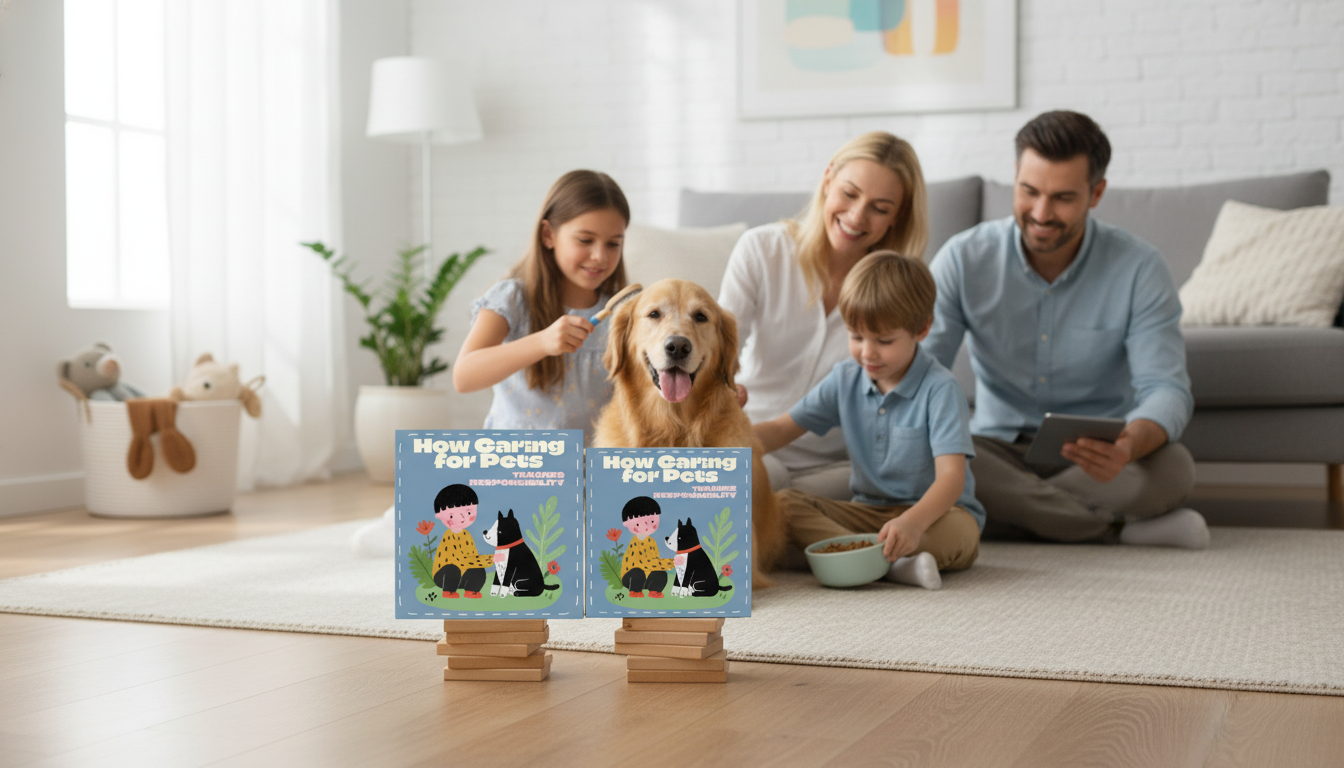
If multiple caregivers are involved, a structured guide can reduce friction and missed care. How Caring for Pets Teaches Responsibility | eBook Guide for Families & Educators | Teaching Responsibility with Pets offers practical, age-based task ideas plus checklists that make handoffs clearer.
Teaching responsibility without compromising animal welfare
Responsibility-building should never depend on a pet “going without” so a lesson can land. Adults remain ultimately accountable for the animal’s wellbeing.
Families with younger children may also want the safety tips compiled by the American Academy of Pediatrics, especially around supervision and respectful handling.
Classroom and group settings: practical ways to share pet-related responsibility
Common challenges and how to handle them
For pets whose health routines need extra consistency, pairing responsibility practice with simple tracking can help teens and adults spot patterns early. Healthy Paws, Happy Life | AI Pet Weight Tracking Guide for Smart Pet Owners | Digital Download eBook for Cat & Dog Health Monitoring supports regular check-ins that reinforce reliability.
A guided resource for families and educators
To support real-world routines beyond the checklist, practical gear can remove common barriers. A Waterproof Reflective Pet Hoodie can make scheduled walks easier in rainy weather or darker winter afternoons, while a Cozy Travel Pet Carrier helps kids and teens participate calmly in car trips for vet visits or family travel (with an adult handling safety and logistics).
FAQ
What if a child forgets to feed or care for the pet?
Adults should always be the safety net so the pet’s care is never missed. Use a simple checklist anchored to existing routines (after breakfast, before bedtime), add a quick check-in, and use a small make-up step that reinforces follow-through without punishing the animal.
Which pet care tasks are safest for younger children?
Choose supervised, low-risk tasks like refilling water, helping measure food, putting toys away, and observing behavior. Require handwashing every time, and keep waste cleanup and any raw-food handling as adult-only tasks for very young kids.
How can educators use pet-related routines to teach responsibility without keeping a classroom pet?
Use responsibility “care stations” with stuffed animals and rotating roles, partner with a local shelter for supply drives, invite a vetted therapy animal visit when allowed, or assign optional home observation journals with family permission. The key is keeping routines consistent and using brief reflection to connect actions to outcomes.










Leave a comment